4 minute read
Test before you treat
The single habit that separates a garment saved from a garment ruined. Two minutes, every time, no exceptions.
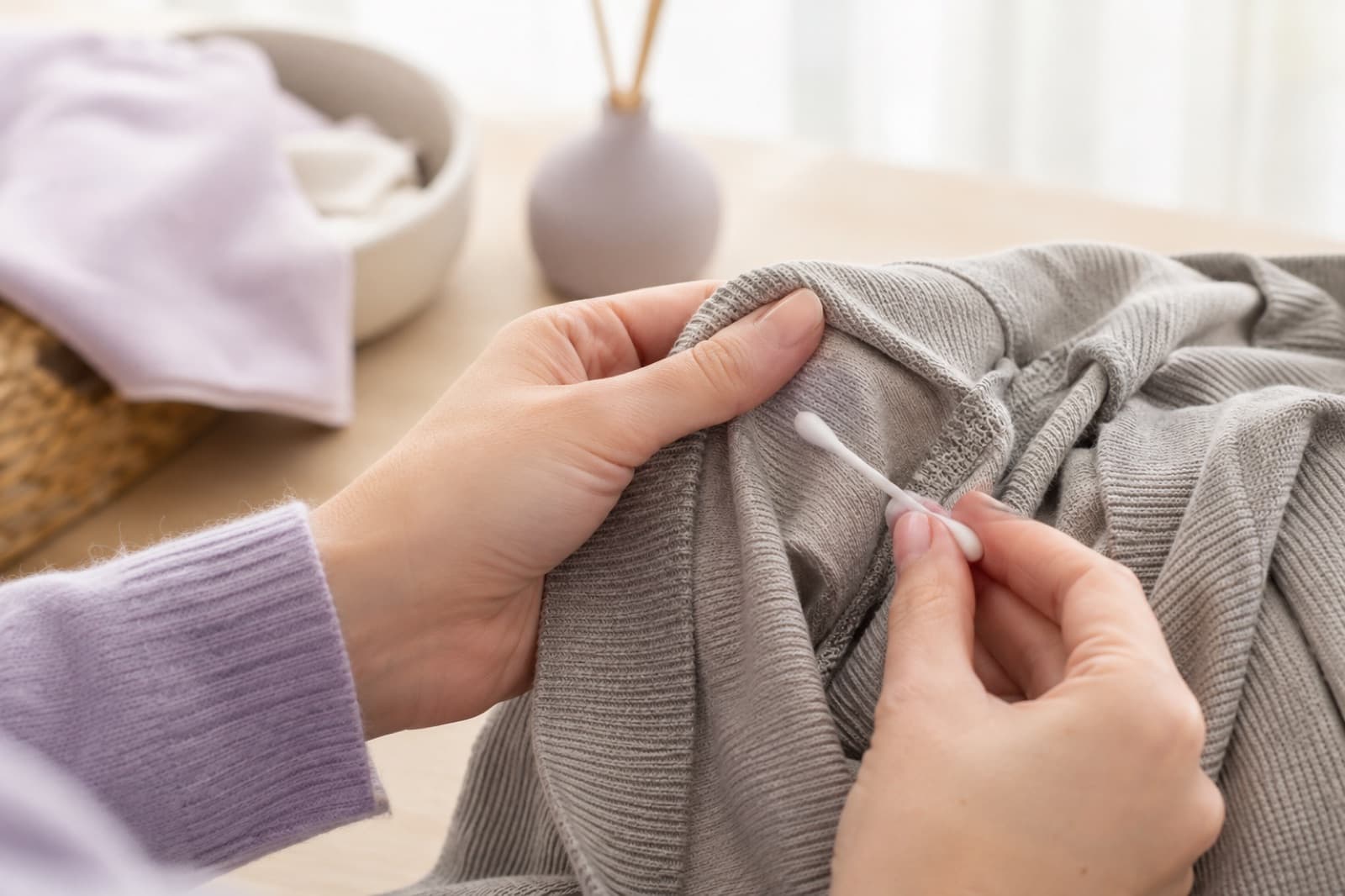
Why a test is not optional
Care products work by acting on fibre. Which means every one of them — a shaver, a stain pen, a wrinkle spray, a leather cream — can act on it in a way you did not want. Cashmere pulls. Silk water-spots. Acetate goes cloudy. Leather darkens, permanently, on the first application.
None of this makes the products bad. It makes them products that need two minutes of attention before they touch anything you care about. There is no product on this site, or anywhere else, that is safe on every fabric. Anyone telling you otherwise is selling something.
Where to test
You want somewhere that will never be seen and that behaves like the rest of the garment. In order of preference:
- An inside seam allowance, turned out.
- The inside of a hem.
- Under a collar or inside a cuff.
- Inside the tongue or heel counter, for shoes.
- A spare piece of fabric if one came with the garment.
How to test
Four steps, and the third one is where most people go wrong.
- Apply a small amount to the hidden area — a cotton swab is ideal for liquids.
- Work it in exactly as you would on the real area. A gentler test tells you nothing useful.
- Let it dry completely. Most damage — water marks, colour shift, stiffening — only appears once the fabric is dry.
- Look at it in daylight, not under a lamp. Compare it against an untreated part.
What a failed test looks like
Any colour change at all, including a slight lightening. A ring or tidemark at the edge of the treated area. A change in texture, stiffness or sheen. Fibres lifting, fuzzing or pulling. Any of these means stop — for that garment, with that product.
A failed test is not a wasted two minutes. It is the two minutes that saved the garment.
When to skip the product entirely
Some garments should not meet a consumer care product at all. If the piece is valuable, antique, heavily structured, unusually constructed, or made from something you cannot identify, take it to a professional cleaner. That is not us being cautious for the sake of it — a specialist has solvents and equipment we do not sell and would not sell to a household.
Safety and fabric notes for this guide
- Test every care product on a small hidden area first, and let it dry, before treating the whole garment.
- Read the garment's own care label before any instruction of ours. Where they disagree, follow the garment.
- Never mix cleaning products, particularly anything containing chlorine with anything containing ammonia.
- Keep chemical, aromatic and moisture-absorbing products away from children and pets.
What this guide uses
 Safety notes
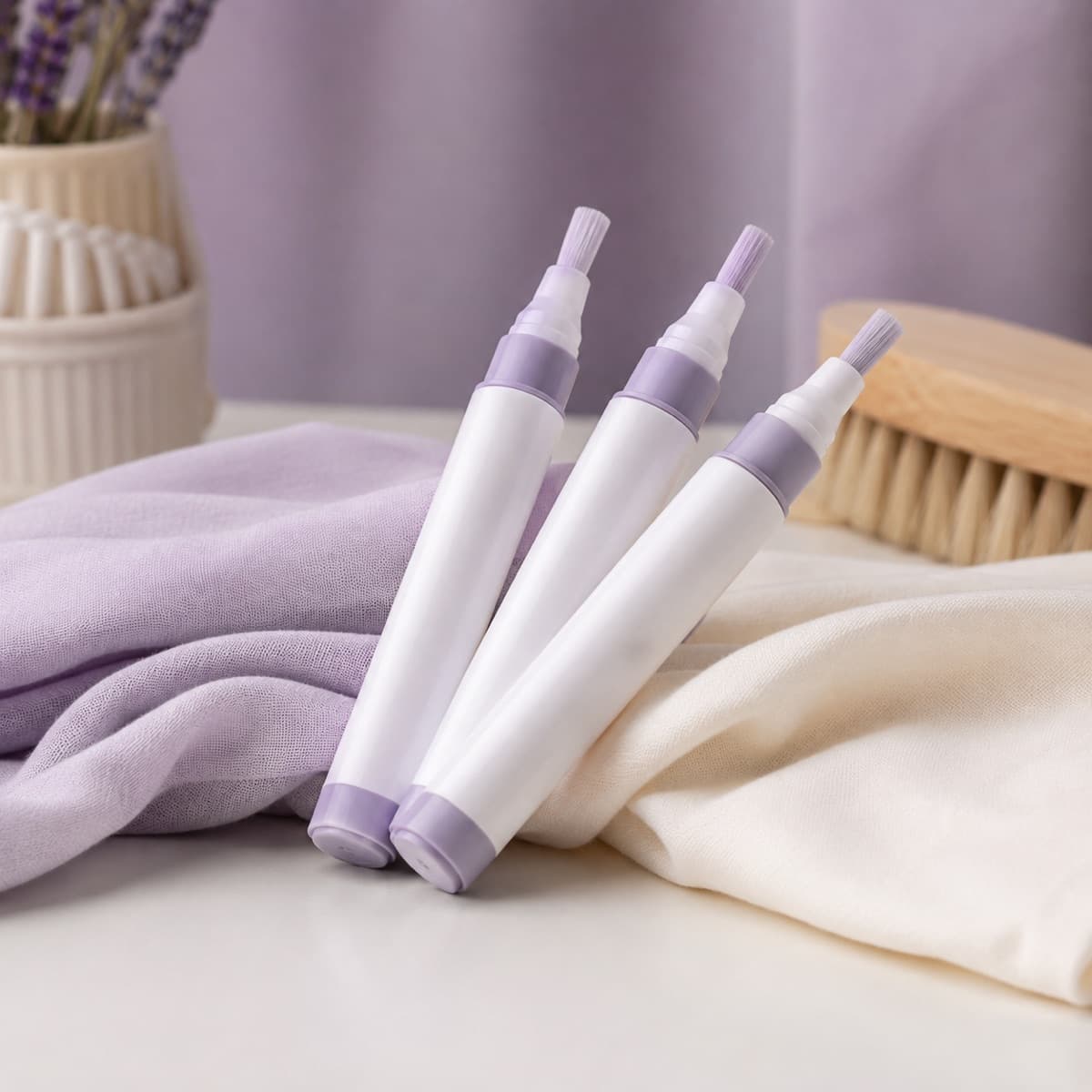
Stain Remover Pen Trio
Three pens for the bag, the desk and the car. Speed beats strength on stains.
USD $16.00
 Safety notes
 Safety notes
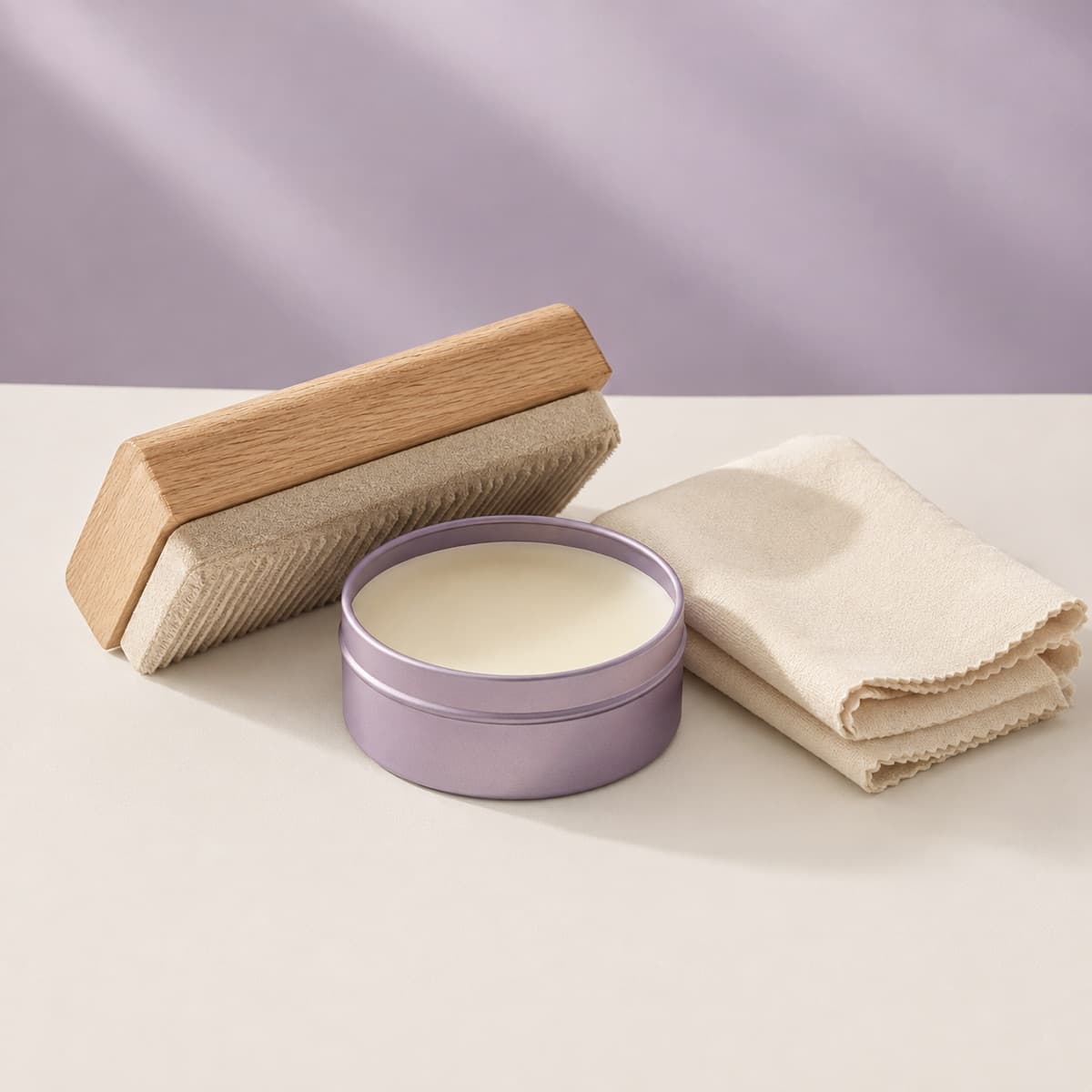
Suede & Leather Care Kit
A crepe brush, a conditioning cream and a cloth. Test before you commit.
USD $34.00