5 minute read
Why clothes look old before they are
Pilling, shine, stretched shoulders and a dropped hem. Four things that read as worn out, and what each one actually is.
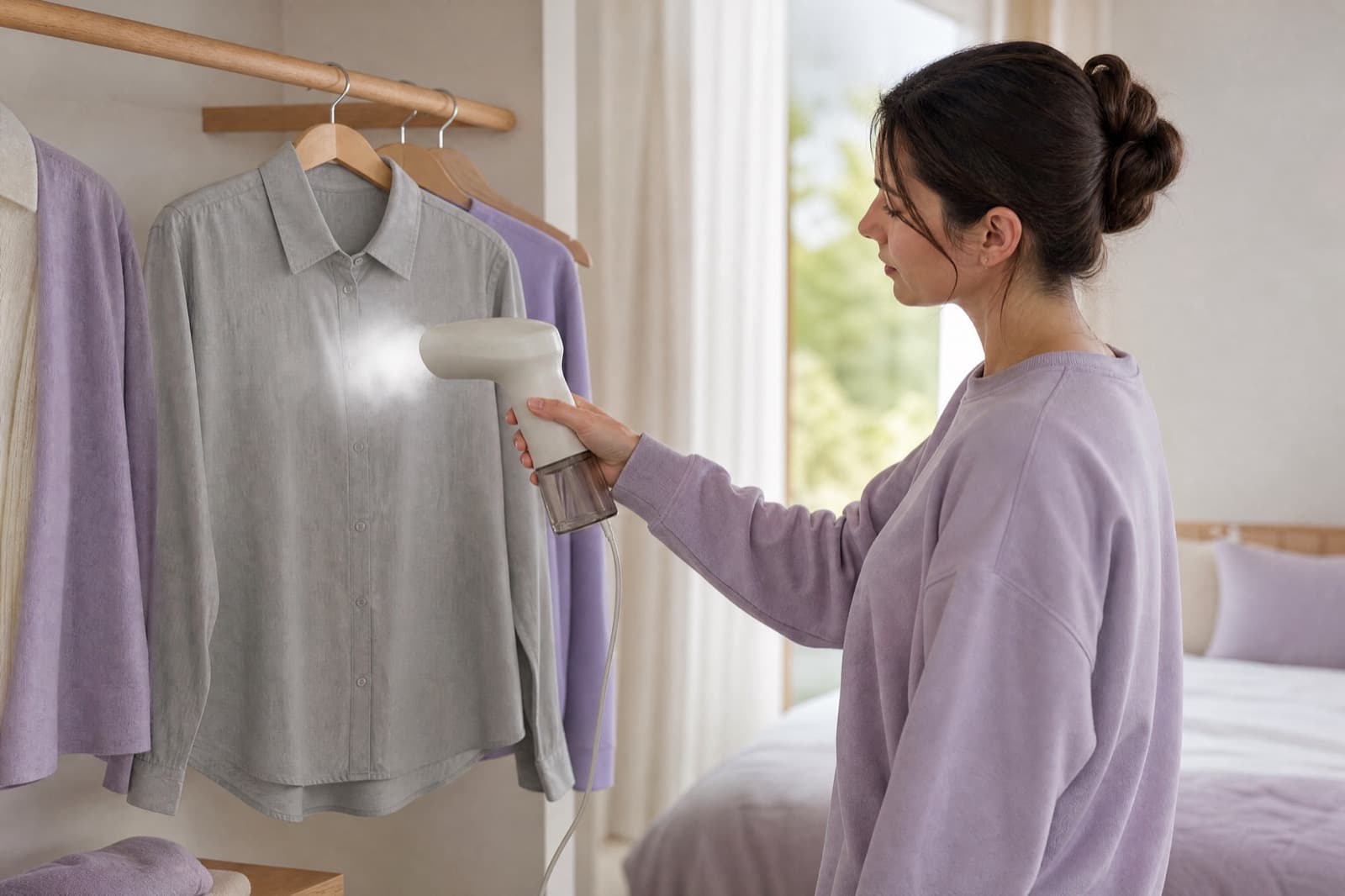
Pilling is friction, not age
Pills form where fabric rubs — under the arms, at the sides where a bag sits, across the seat. Short fibres work loose, tangle, and ball up. Softer yarns pill more, which is why cashmere does it and a hard-twisted worsted does not. It is not a sign of poor quality and it is not permanent.
Match the tool to the fabric. A blade shaver on sturdy knit and fleece. A fine comb or a stone on cashmere and fine merino, where a blade would cut into the surface. Always on a flat garment, never on one you are wearing, always testing an inside seam first.
Shine is pressure and heat
That polished look on wool trousers and jacket elbows is fibre flattened by an iron that was too hot or pressed too hard. Once the surface is crushed it does not fully come back.
Steam instead of pressing wherever the garment allows it. Steam relaxes fibres rather than flattening them, which is exactly what wool and structured tailoring want. If you must iron, use a pressing cloth.
Stretched shoulders are gravity plus a bad hanger
Those two bumps in a knit's shoulders are the hanger's ends pushing out against a garment too heavy to hang. Heavy knitwear should be folded — the hanger is not the problem to solve, hanging is.
For structured jackets, the opposite: they need a broad contoured hanger that carries the shoulder line the tailoring was built around. A thin wire hanger under a wool coat collapses the shape in a season.
A dropped hem is five minutes
Most garments are retired over a repair that takes less time than choosing what to wear instead. A hem, a button, a small seam. Iron-on hem tape does it without a needle; a basic sewing kit does it properly.
The point is not thrift. It is that a garment with a dropped hem reads as finished, and the same garment with the hem back reads as fine.
The order to work in
Dry work before wet work, always. De-pill and brush down first, because washing a pilled garment sets the pills further in. Treat stains at the point they happen rather than at the point you wash. Wash. Dry flat if it is knitted. Steam last, on the hanger, working top down.
Safety and fabric notes for this guide
- Test any care product on a small hidden area first and let it dry before treating the whole garment.
- Steam causes burns. Never direct a steamer at a person or pet, never steam a garment being worn, keep out of reach of children, and fill with plain water only.
- Fabric shaver blades are sharp. Adult use only, and keep out of reach of children.
What this guide uses
 Safety notes
Manual Fabric Shaver + Blades
Hand-powered pill removal with two spare mesh blades. No cord, no battery.
USD $19.00
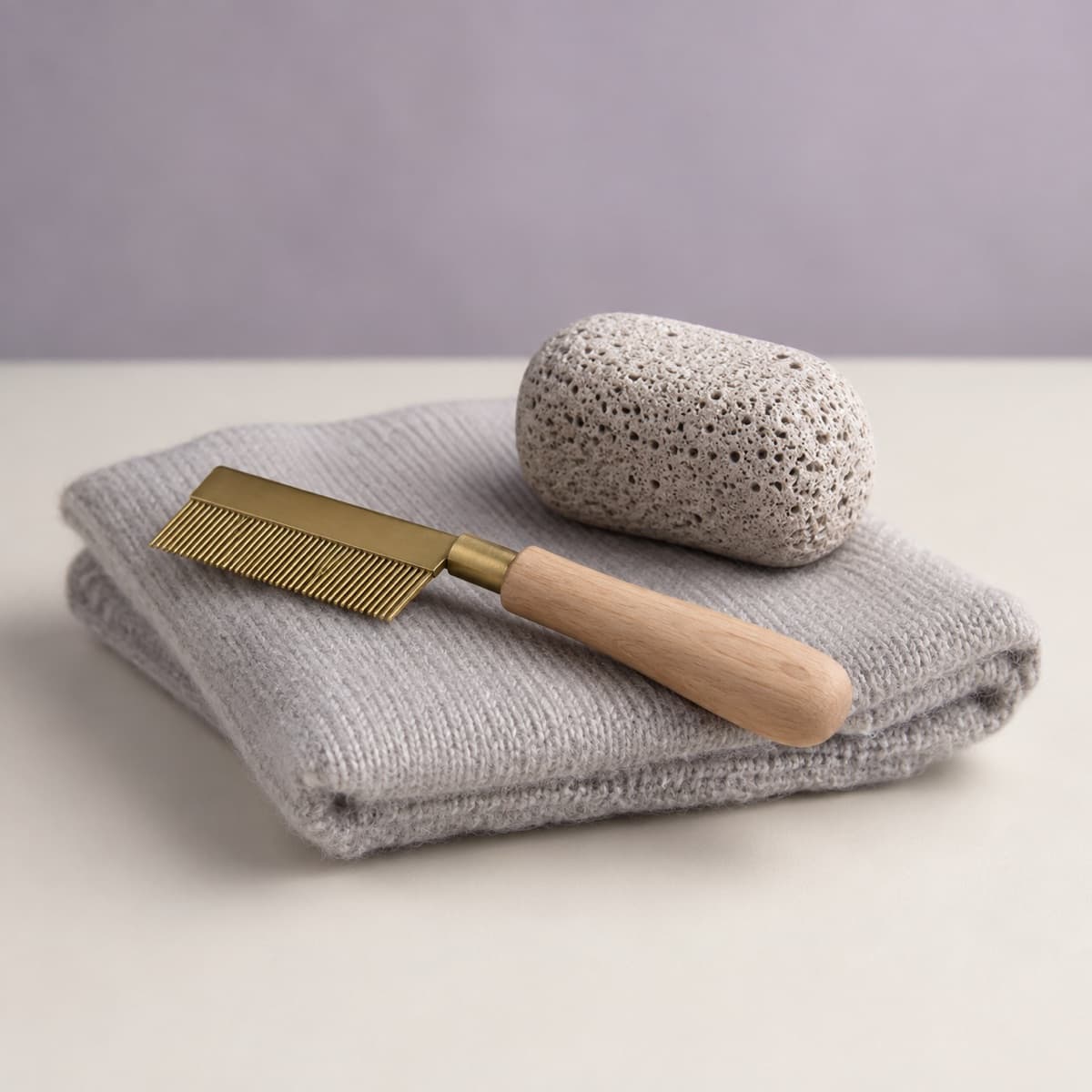
Cashmere Comb & Sweater Stone Duo
The gentle pair for fine knitwear that a shaver would be too blunt for.
USD $22.00
 Safety notes
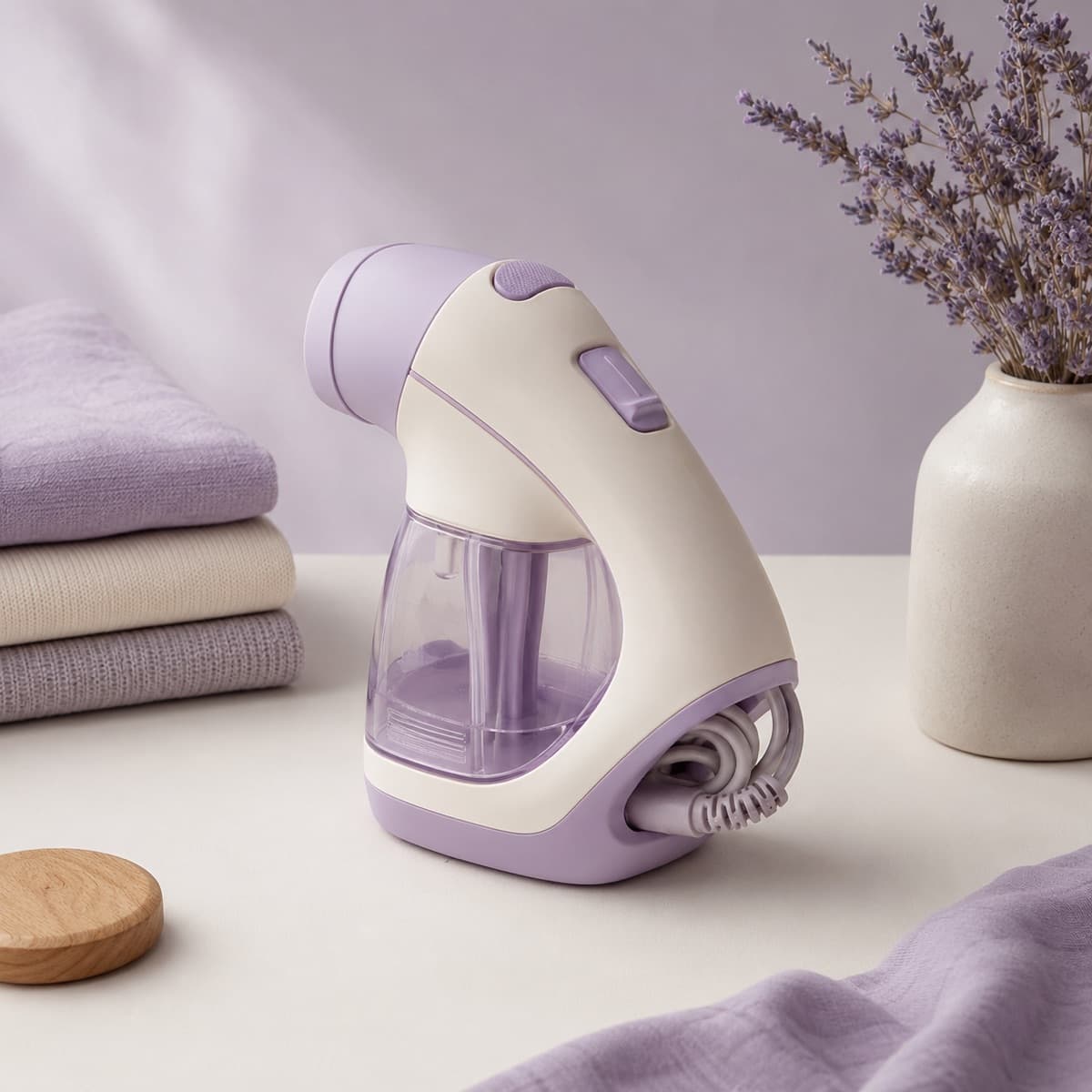
Handheld Garment Steamer (Low-Wattage)
A compact domestic steamer for hanging garments. Plain water only.
USD $46.00