6 minute read
The closet reset, in one afternoon
Empty it completely, put it back deliberately. Four hours that give back roughly a third of the rail.
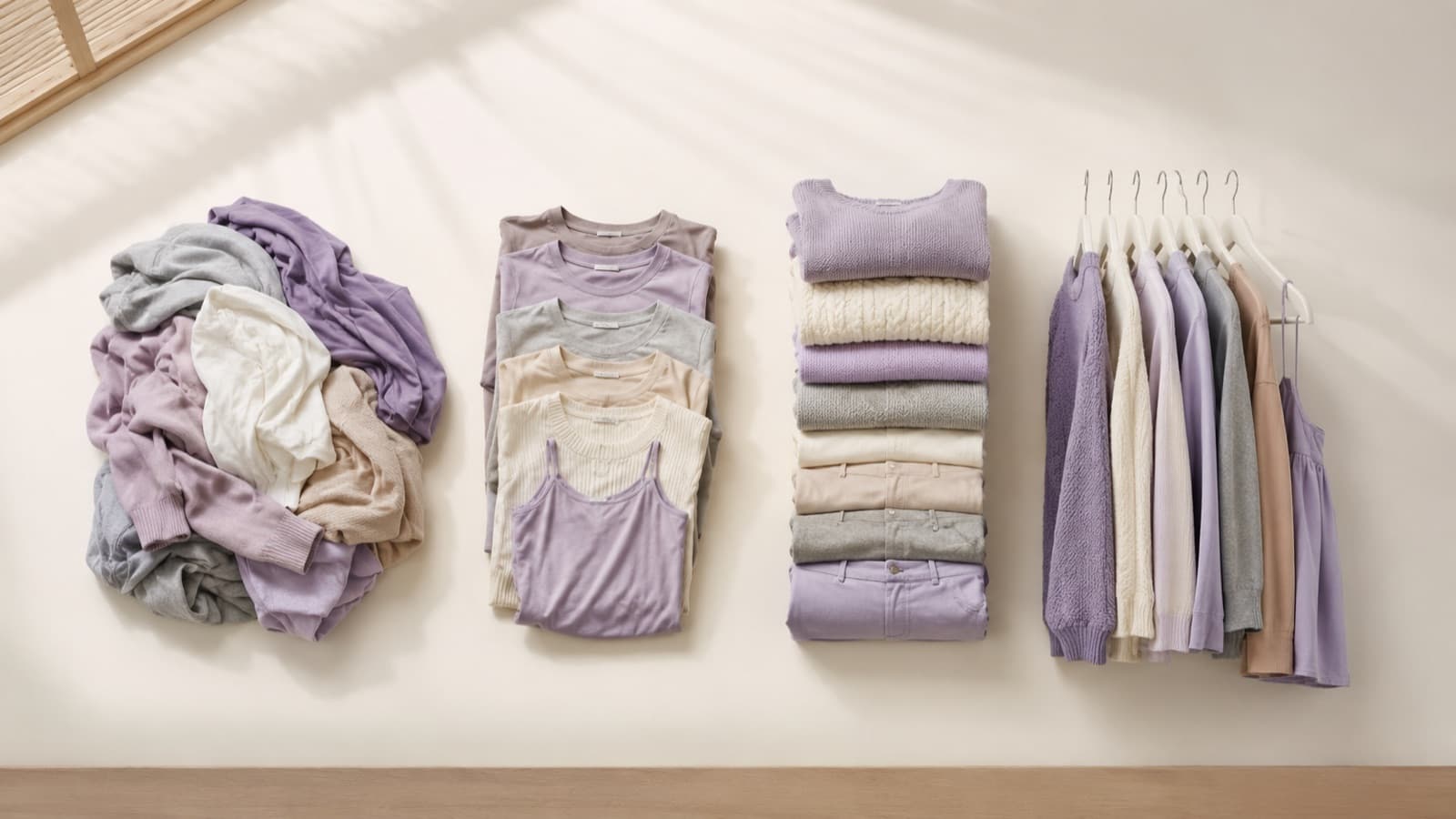
Empty it. All of it.
This is the step people skip, and skipping it is why the closet is back to chaos in a month. Take everything out — rail, shelf, floor, drawers. Put it on the bed, which forces you to finish before you can sleep.
An empty closet also lets you see what you actually have to work with: how long the rail really is, how much dead air sits above it, whether the floor is usable.
Sort into four, not two
Keep and discard is too blunt and stalls quickly. Use four piles instead:
- Wear now — in season, fits, you reach for it.
- Wear later — out of season. This pile is going into storage, not back on the rail.
- Needs something — a button, a hem, a de-pill, a proper wash. Be honest about whether you will actually do it.
- Gone — and get it out of the house the same day, or it migrates back.
Match the hangers
The biggest single space gain in any closet is replacing a jumble of mismatched hangers with one slim profile. Bulky hangers make a rail look full at about sixty percent capacity, and swapping the lot typically gives back around a third of it.
Two exceptions worth keeping: broad contoured hangers for jackets and coats, which need the shoulder support, and multi-tier hangers for trousers. Everything else goes on the slim ones, hooks all facing the same way — which sounds fussy until you try to pull one garment out of a rail where they do not.
Hang what should hang, fold what should fold
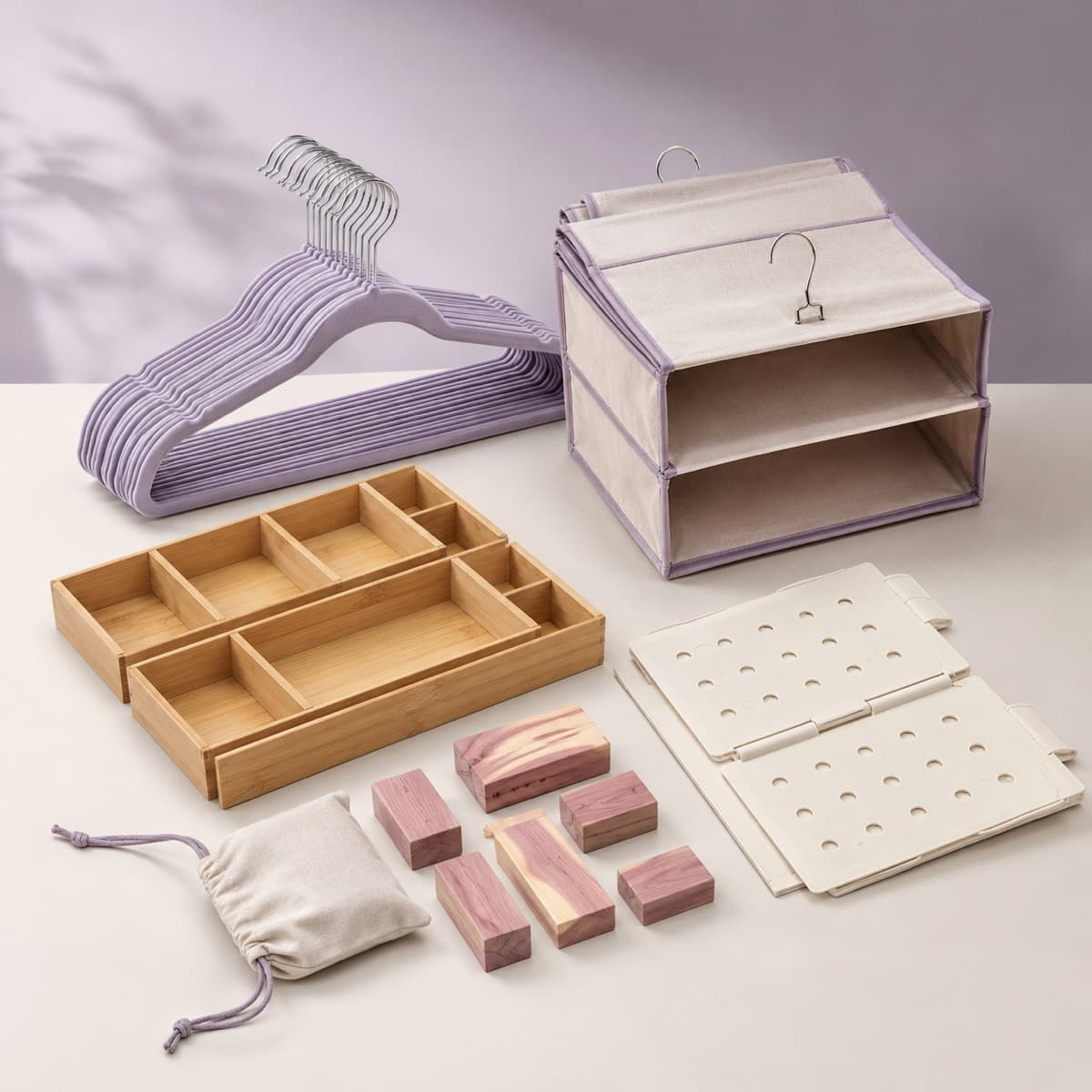
Heavy knitwear stretches on any hanger. It belongs folded, and if you have no shelf space, a hanging shelf organiser turns a section of rail into stacked storage.
Shirts, blouses, dresses, jackets and trousers hang. Knitwear, jeans, sweatshirts and t-shirts fold. Filed vertically in a drawer with dividers rather than stacked flat, because a stack means you only ever wear the top three things.
Use the vertical space
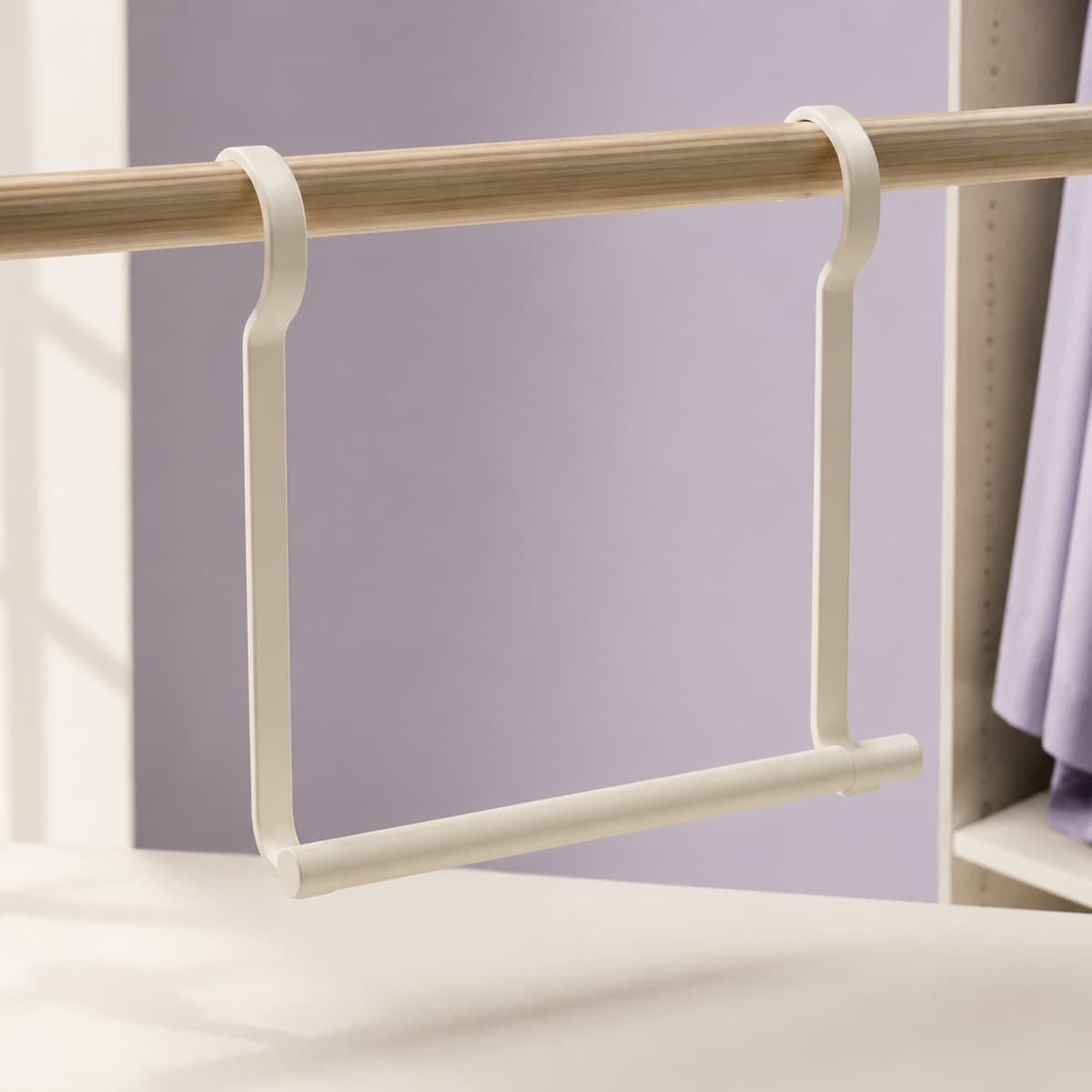
There is almost always two feet of dead air above a rail of shirts. A rod extender hangs a second bar from the existing one and doubles the hanging length for anything short. Cascading hooks stack hangers vertically. The back of the door takes a no-drill hook rack.
None of this needs a drill, which matters if you are renting.
Then group, and stop
Group by garment type first, then by colour within each group. Type before colour, because you look for a shirt before you look for a blue thing.
Leave a hand's width of free space at the end of the rail and a gap in each drawer. A closet packed to capacity is one you stop putting things back into, and a closet you stop putting things back into is the one you started with.
Safety and fabric notes for this guide
- Check what your rail, shelf or door is rated to carry before loading a second tier or a hook rack onto it.
- Store everything clean and completely dry. A mark left on a stored garment sets over months.
What this guide uses
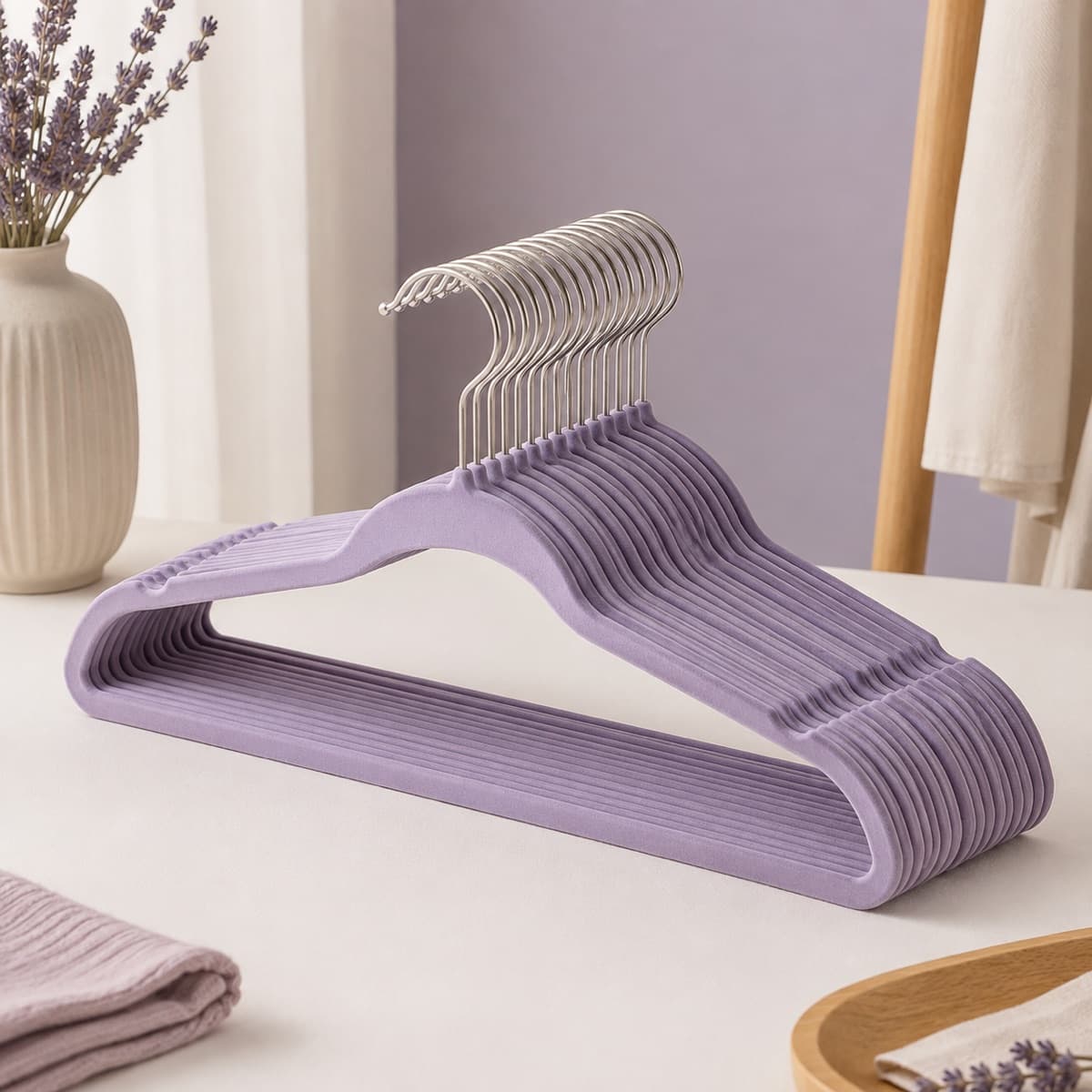
Velvet Slim Hanger 50-Pack
The single change that gives back the most rail space. Fifty at once.
USD $39.00
 Safety notes